Medicare Insurance Broker Fresno CA: A Simple Guide to Medicare Advantage Plans


Choosing a Medicare plan rarely feels simple when you first sit down to do it. The brochures make every option sound polished. The television commercials promise extra benefits. Friends swear by one plan, then complain about it six months later. If you are in Fresno, or helping a parent or spouse here, the local details matter more than most people realize. Networks, doctor access, prescription coverage, hospital systems, and county-specific plan availability can change what looks good on paper into something frustrating in practice.
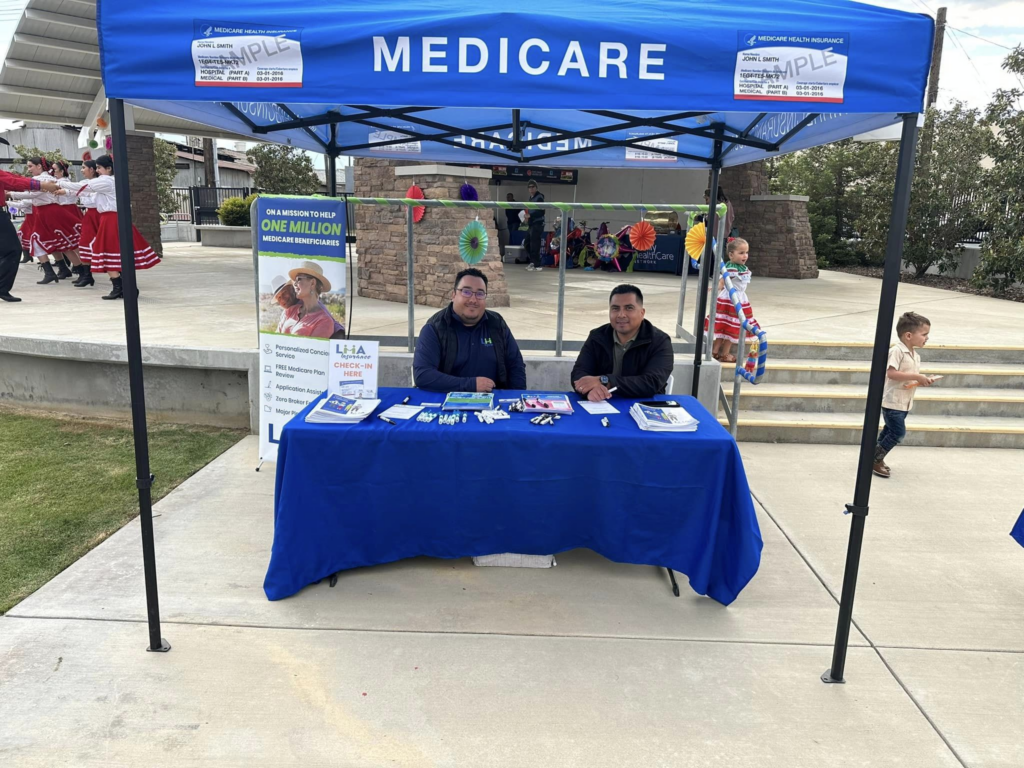
That is where a Medicare Insurance Broker Fresno CA residents can speak with often becomes useful. A good broker does more than hand over plan names. They help you sort through trade-offs, explain how Medicare Advantage actually works in day-to-day life, and flag issues that are easy to miss until you are already enrolled.
This guide breaks down Medicare Advantage plans in plain English, with the kind of practical perspective that matters when real medical needs, real prescription costs, and real provider relationships are involved.
Why Medicare Advantage gets so much attention
Original Medicare, which includes Part A and Part B, gives broad access to providers who accept Medicare. That flexibility is a major strength. At the same time, Original Medicare has deductibles, cost-sharing, and no built-in cap on out-of-pocket spending for Part A and Part B services. It also does not include routine prescription drug coverage unless you add a separate Part D plan.
Medicare Advantage, also called Part C, bundles Medicare-covered services through private insurance companies approved by Medicare. Many plans include prescription drug coverage, and many advertise extras such as dental, vision, hearing, transportation, or fitness benefits. For some people, the appeal is immediate. One card, one plan, potentially lower premiums, and a yearly out-of-pocket maximum for covered medical services.
That appeal is real, but it does not make Medicare Advantage automatically better. In Fresno County, as in much of California, the details can vary sharply by plan. One may have a broad physician network and solid prescription coverage, while another may look inexpensive up front but expose you to higher specialist copays or a narrower hospital network. The right choice depends less on the ad and more on your actual care pattern.
What a Medicare Advantage plan really is
A Medicare Advantage plan is a private health plan that replaces the way you receive your Part A and Part B benefits. You still have Medicare, and you still must pay your Part B premium unless another program helps cover it. But your care is administered through the plan rather than directly through Original Medicare.
These plans often come in forms such as HMO, PPO, and sometimes special needs plans for people with certain health conditions or Medicaid eligibility. The structure matters.
An HMO usually asks you to use in-network providers and often requires referrals for specialists. A PPO tends to offer more flexibility, though out-of-network care may cost more. That sounds straightforward until it collides with reality. If your primary doctor is in one medical group but your preferred cardiologist is tied to another, a low-premium HMO can become inconvenient very quickly. If you travel often outside Fresno or split time between California and another state, a PPO may deserve a closer look.
A seasoned Medicare Insurance Broker will usually start with your doctors, prescriptions, travel habits, and budget before discussing plan names. That order matters. Too many people shop backward, beginning with premium instead of usage.
Fresno is not a generic Medicare market
People often assume Medicare plans work more or less the same everywhere. They do not. Fresno has its own provider landscape, medical groups, hospital affiliations, and insurer competition. A plan that works smoothly in San Diego or Sacramento may not even be available here, or it may operate with a different network structure.
Local context affects at least three things.
First, doctor participation changes by county and by plan contract. A physician may accept one carrier’s PPO but not its HMO. They may also be in-network for one year and not the next.
Second, hospital access can be a deciding factor for people managing complex conditions. If someone has a long-standing relationship with a specific specialist team or medical center, network verification needs to happen before enrollment, not after.
Third, prescription costs can be surprisingly local because formularies, preferred pharmacies, and tier placement differ by https://rylantbyx554.fotosdefrases.com/what-fresno-ca-families-should-know-about-working-with-a-medicare-insurance-broker plan. A drug that is affordable under one Medicare Advantage plan may cost far more under another, even if both plans advertise prescription coverage.
This is one reason people often search specifically for a Medicare Insurance Broker Fresno CA instead of speaking only with a national call center. Local brokers tend to know which plans have smoother provider access in the area, which carriers have been more stable, and where clients commonly run into trouble.
The basic trade-off: lower monthly cost versus more network management
Most Medicare decisions come down to a trade-off between predictable monthly expense and freedom of access.
Medicare Advantage plans often win on affordability at first glance. Many have low or even zero-dollar plan premiums beyond the Part B premium. They may also package drug coverage and routine extras into one plan. For retirees watching every dollar, that can be compelling.
The price you pay is usually not just financial. It is structural. You agree to work inside the plan’s rules, network, prior authorization processes, and cost-sharing design. Sometimes that works perfectly well, especially for people with stable care needs, local doctors, and a willingness to stay in-network. Other times it causes stress, particularly when someone develops a serious illness and suddenly needs a specialist, advanced imaging, or ongoing treatment across multiple providers.
That does not mean Medicare Advantage is a poor choice. Many enrollees are satisfied. It means satisfaction depends on fit. A healthy 68-year-old who sees a primary doctor twice a year and takes two generic medications may value low premiums and extra dental coverage. An 81-year-old with cancer history, diabetes, and frequent specialty visits may care more about network depth, referral ease, and maximum annual exposure.
What to review before you enroll
The people who feel blindsided by a plan usually skipped one of the fundamentals. A glossy benefits summary is not enough. Before enrolling, look closely at the practical pieces of using the plan.
Here are the five areas that deserve the closest review:
- Confirm whether your doctors, specialists, and preferred hospitals are in-network for the exact plan, not just the insurance company.
- Check every prescription drug you take, including dosage and pharmacy, against the plan formulary.
- Review copays for primary care, specialists, outpatient surgery, imaging, urgent care, and hospital stays.
- Understand the annual out-of-pocket maximum and what counts toward it.
- Ask how referrals and prior authorizations work for the services you are most likely to use.
Those five checks prevent a large share of enrollment mistakes. They sound basic, but they are where most real-world problems live. I have seen people assume their doctor “takes that insurance” only to learn later that the office accepts the carrier under one product line but not the Medicare Advantage plan they chose. I have also seen someone select a plan because it included dental, then discover their oncology medication landed in a costly tier.
HMO or PPO in Fresno: the choice that changes everything
For many Medicare shoppers, the first serious fork in the road is HMO versus PPO. If you understand this choice, everything else becomes easier.
An HMO can be a strong option when your care is fairly centralized. If your primary doctor, specialists, lab work, and hospital preferences all line up within the same network, an HMO may deliver solid value. Costs are often easier to predict, and premiums may be lower. The friction comes when you want care outside that structure. Referrals may be required. Some specialists may only be available through certain medical groups. Out-of-network coverage may be limited or nonexistent except in emergencies.
A PPO offers more room to move. You can often see providers outside the network, though at a higher cost. For someone who wants flexibility or already receives care from a mix of providers, a PPO can reduce disruption. The monthly premium may be higher, and out-of-network use can become expensive, but some people gladly pay for that wider lane.
In Fresno, where provider affiliations can shape access, this decision is not abstract. It affects how easily you can keep the physicians you know and how complicated your care becomes if your needs change.
Prescription coverage is often the hidden deal-breaker
People tend to focus on doctors first, which makes sense, but drug coverage can quietly drive overall cost. Medicare Advantage plans with built-in drug coverage are common, yet not all drug coverage is equal.
Formularies differ. Tiers differ. Pharmacy networks differ. Utilization rules differ. A medication may require prior authorization, quantity limits, or step therapy. None of that is unusual, but it can become a major issue if you rely on brand-name drugs, specialty medications, insulin, inhalers, or blood thinners.
A plan with a lower premium can cost more over the year if your medications fall into less favorable tiers. On the other hand, a slightly higher premium may save you hundreds or even thousands if it offers better cost-sharing for the drugs you actually use.
This is one area where a careful Medicare Insurance Broker earns their keep. Comparing plan drug formularies line by line is tedious work, but it matters. If a broker does not ask for your current medication list, that is a warning sign.
Extras are nice, but they should not drive the decision
Dental, vision, hearing, over-the-counter allowances, fitness memberships, and transportation benefits get a lot of attention. Some of these benefits are genuinely useful. Routine dental coverage alone can be valuable for someone on a fixed income. But extras should be the tie-breaker, not the foundation of the decision.
A plan can offer attractive extras and still be a poor fit for your medical needs. If the network is narrow, the specialist copays are high, or your prescriptions are poorly covered, a free gym membership does not make up for it.
Think of extra benefits as seasoning, not the meal. Nice to have, worth comparing, but secondary to medical access and total annual cost.
When Medicare Advantage tends to work well
Some people do very well in Medicare Advantage plans for years. The fit tends to be strongest when a few conditions are present. Care is mostly local. Providers are established and in-network. Travel outside the service area is limited. Prescriptions are stable and inexpensive under the plan. The member is comfortable following plan rules.
In those cases, a Medicare Advantage plan can be cost-effective and easy to manage. The annual out-of-pocket maximum adds a layer of financial protection that Original Medicare alone does not provide. For many Fresno retirees who value all-in-one coverage and do not need broad national provider access, that can be a very reasonable choice.
When extra caution is warranted
There are also situations where a person should slow down and examine the decision much more carefully. Complex health conditions are the obvious example, but they are not the only one.
A few scenarios deserve extra scrutiny:
- You see multiple specialists across different medical groups or hospital systems.
- You spend part of the year outside Fresno County or outside California.
- You take high-cost brand-name or specialty medications.
- You expect surgery, rehabilitation, or frequent imaging in the next year.
- You strongly want the broadest possible provider access.
None of those scenarios automatically rules out Medicare Advantage. They simply raise the cost of making the wrong plan choice. In those cases, side-by-side comparison becomes essential, and the conversation should go beyond premium and dental benefits.
What a good broker should help you understand
Not every broker works the same way. Some are thorough and patient. Some are too quick to steer the conversation toward whichever plan is easiest to sell. If you are working with a Medicare Insurance Broker Fresno CA shoppers trust, you should expect a fact-based discussion centered on your situation rather than a one-size-fits-all pitch.
A good broker should explain the plan types available in your county, verify provider participation, review prescription coverage, discuss worst-case annual cost exposure, and help you understand enrollment timing. They should also tell you where uncertainty remains. Medicine and insurance both change. A trustworthy professional does not pretend every variable can be controlled.
They should also be clear about what they do not control. A broker cannot guarantee a doctor will remain in-network forever. They cannot promise a future prior authorization will be approved. What they can do is help you make a better decision with the information available now.
Timing matters more than many people think
A solid plan chosen at the wrong time can still create problems. Medicare has enrollment periods, and the rules differ depending on whether you are turning 65, retiring after employer coverage, moving, qualifying for certain special enrollment rights, or reviewing coverage during the annual election period.
Missing a window can limit options or delay a coverage change. It can also leave someone in a plan that no longer fits. Fresno residents often begin shopping only after a doctor office tells them a plan is changing or a prescription becomes expensive. By then, choices may be narrower until the next allowed election period.
That is another reason to review coverage annually, even if you were happy last year. Plans can change premiums, copays, formularies, provider networks, and benefit design from one year to the next. A plan that worked beautifully at 72 may be a poor match at 74.
Common mistakes I see people make
The most common mistake is choosing based only on premium. Zero-dollar plans can be excellent for the right person, but premium alone says very little about total value. A second common mistake is assuming a spouse should automatically choose the same plan. Married couples often have different doctors, prescriptions, and risk tolerance. Their best-fit plans may differ.
Another frequent misstep is failing to verify doctors directly. People rely on old directories, verbal assumptions, or partial carrier information. Networks change, and office staff may answer general insurance questions without checking the exact Medicare Advantage product.
Then there is the issue of future needs. Nobody can predict health perfectly, but if someone already shows signs of rising medical complexity, it makes sense to weigh flexibility more heavily than they might have a few years earlier.
The right question is not “Which plan is best?”
The better question is “Which plan best fits how I actually receive care?”
That framing changes everything. It moves the conversation away from slogans and toward facts. It helps you compare likely usage, doctor access, drug costs, and annual risk. It also keeps you from chasing a plan because a neighbor likes it. Your neighbor may have one prescription, one doctor, and no travel. You may have a completely different profile.
For Fresno residents, the smartest approach is usually local, practical, and specific. Start with your doctors. Add your prescriptions. Factor in your travel patterns and budget. Then compare plan structures, not just plan names.
A steady, practical way to make the decision
If Medicare Advantage is on your shortlist, do not rush it. Gather your provider names, medications, preferred pharmacies, and current medical concerns. Then review the available plans in Fresno County with someone who can explain the trade-offs clearly. That might be a trusted local advisor, a benefits counselor, or a knowledgeable Medicare Insurance Broker who takes time to do real comparisons.
The goal is not to find a perfect plan. Medicare rarely offers perfection. The goal is to find a plan whose strengths line up with your actual needs and whose weaknesses you can live with. For some people in Fresno, that will absolutely be a Medicare Advantage plan. For others, especially those with more complicated care patterns, the decision may require a more cautious look.
What matters most is choosing with open eyes. When people understand how networks, referrals, prescriptions, and annual cost exposure fit together, Medicare Advantage becomes far less confusing. It stops being a sales pitch and starts becoming what it should be, a practical coverage choice shaped by real life.
Local Medicare Agents - LMA Insurance
Address: 5412 N Palm Ave Ste 109, Fresno, CA 93704
Phone number: +15593664734
FAQ About Medicare Insurance Broker Fresno CA
What's the difference between a Medicare agent and a Medicare broker?
The primary difference is that a Medicare agent typically represents one specific insurance company (a captive agent), while a Medicare broker represents you and shops plans across multiple insurance carriers.
Is it good to use a Medicare broker?
Using a licensed Medicare broker is generally a helpful choice because their services are free to you.
How much does a Medicare broker cost?
Using a Medicare broker costs you exactly $0. Brokers do not charge beneficiaries any fees for consultation, plan comparison, or enrollment assistance. In fact, federal regulations explicitly prohibit brokers from charging you a fee to enroll in Medicare Advantage or Part D plans.